
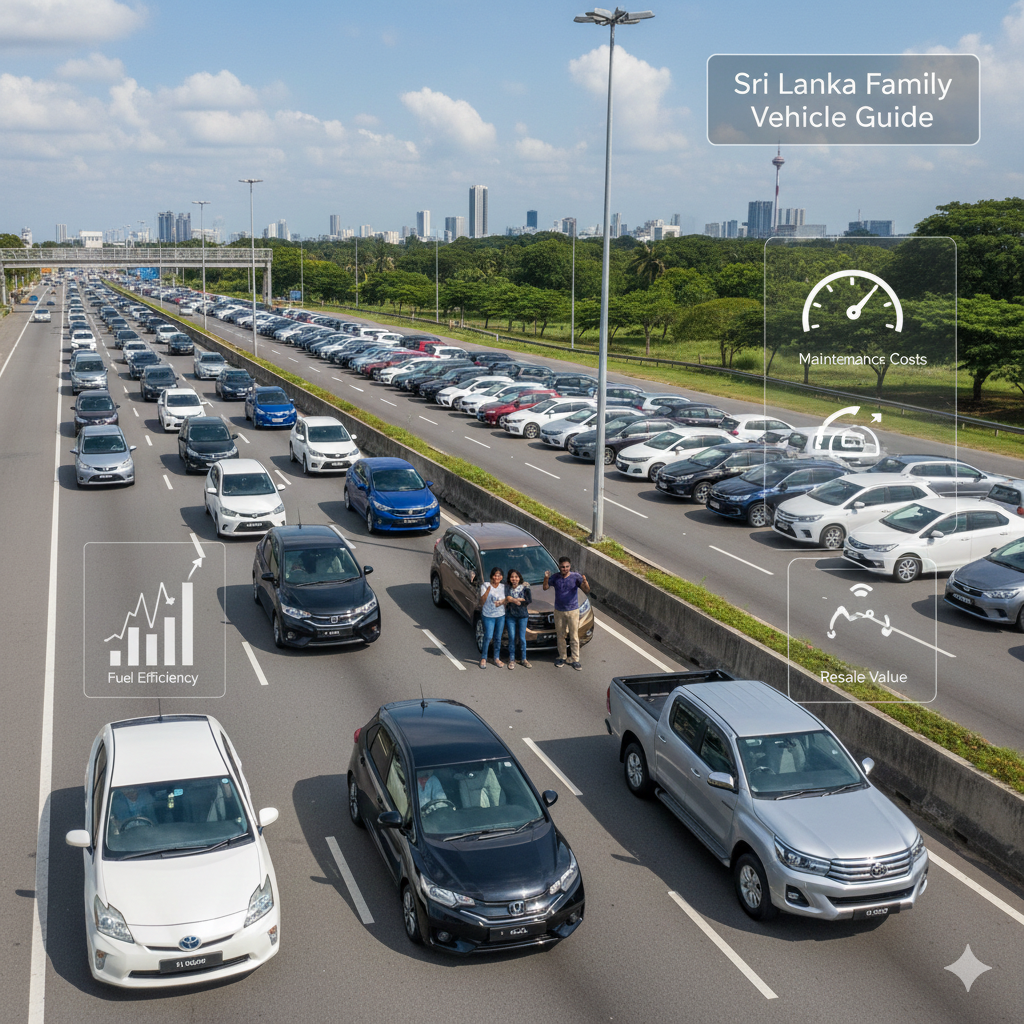
Choosing a family vehicle in Sri Lanka isn’t just about picking the prettiest car on the lot. After helping my friend import his first vehicle last year, I learned there’s so much more to consider than just the price tag.
Understanding Your Family’s Real Needs
When my friend first started looking, he was dead set on a luxury SUV. “It looks amazing,” he kept saying. But after sitting down and actually thinking about his daily life in Colombo, we realized what we really needed was quite different.
Consider Your Daily Commute
If you’re driving through Colombo traffic every day like most of us, fuel efficiency suddenly becomes your best friend. That luxury SUV my friend wanted? It would’ve cost him nearly double in fuel compared to a hybrid sedan. We calculated he’d spend an extra Rs. 50,000 per month just on petrol. That’s Rs. 600,000 a year!
Think About Parking
Here’s something nobody talks about enough - where are you actually going to park this thing? A person I know bought a massive Land Cruiser and now he can barely fit it in his garage. He’s constantly worried about scratches in tight parking spots. Sometimes bigger isn’t better.
The Hidden Costs Nobody Warns You About
This is where things get real. The sticker price is just the beginning.
Insurance Will Surprise You
Luxury vehicles cost significantly more to insure because parts are expensive and repairs require specialized mechanics.
Spare Parts Availability
Even a simple sensor replacement can become a lengthy and costly process if the required part has to be imported, sometimes taking weeks to arrive. During this period, the vehicle may remain unusable, leading to additional daily transportation expenses.
For popular models such as the Toyota Prius, Aqua, or Honda Vezel, spare parts are widely available across Colombo. In contrast, sourcing parts for European luxury vehicles often proves challenging outside authorized dealers, resulting in higher costs and longer downtime.
Service Costs
Regular service for my Honda costs around Rs. 30,000-35,000. My friend with a Mercedes? He pays lot more than that for the same basic service. Over five years, that’s a difference of over a million. Think about what else you could do with that money.
Fuel Type: The Decision That Affects Your Daily Life
This is probably the most important choice you’ll make, and it’s not as simple as “petrol or diesel” anymore.
Petrol Vehicles
I drive a petrol car, and honestly, it’s been great for city driving. The engine is quieter, maintenance is simpler, and I don’t have to worry about the black smoke that diesel cars sometimes produce. But yes, I’m paying more at the pump every week.
Best for:
- Mostly city driving
- Shorter daily commutes (under 30km)
- People who value a quieter ride
- Those who don’t want to deal with diesel maintenance
Diesel Vehicles
My uncle swears by his diesel Hilux. He drives from Galle to Colombo regularly for work, and the fuel savings are massive. But he also complains about the noise and the fact that he needs to drive it regularly - diesel engines don’t like sitting idle.
Best for:
- Long-distance driving
- Highway commutes
- Heavy-duty use
- People who drive more than 50km daily
Hybrid Vehicles
This is where things get interesting. My brother finally went with a Toyota Aqua hybrid, and he’s been thrilled. In Colombo traffic, the electric motor does most of the work, and his fuel consumption is incredibly low.
But here’s what the salespeople don’t tell you: the hybrid battery will eventually need replacement. It’s not cheap - around Rs. 300,000-500,000 depending on the model. However, with proper care, these batteries last 8-10 years, so it’s not an immediate concern.
Best for:
- Heavy city traffic
- Stop-and-go driving
- Environmentally conscious buyers
- Long-term ownership (to offset the higher initial cost)
Electric Vehicles
I’ll be honest - I’m not ready for a full electric vehicle yet. The charging infrastructure in Sri Lanka is still developing, and I’m worried about getting stuck somewhere without a charge. But if you have a garage with charging facilities and mostly drive within Colombo, it could work.
Size Matters (But Not How You Think)
Compact Cars (Aqua, Fit, Vitz)
Perfect for navigating tight Colombo streets and finding parking. I had a Honda Fit, and I can park anywhere. The fuel economy is excellent, and maintenance is cheap. But with more passengers, I started to feel cramped.
Sedans (Axio, Allion, Civic)
This is the sweet spot for most families. Comfortable for four adults, decent boot space, and still manageable in traffic. One of my cousin had my Axio for three years, and it’s been perfect for their family of four.
SUVs (Vezel, CH-R, Harrier)
Great if you need the space or occasionally drive on rough roads. My friend with a Vezel loves the high seating position and the feeling of safety. But he admits the fuel consumption in traffic makes him wince sometimes.
The Age Question: New vs. Used
This is where emotions and logic often clash.
Brand New (or Nearly New)
Yes, it’s expensive. Yes, the taxes are brutal. But you get peace of mind. No hidden problems, full warranty, and you know exactly how the car has been treated. My friend paid a premium for his 2025 Vezel Z, but he sleeps well knowing there are no surprises waiting.
3-7 Years Old
This is actually the sweet spot. Someone else took the depreciation hit, but the car is still modern and reliable. Just make sure you get a thorough inspection. I mean thorough - don’t skip this step to save Rs. 10,000. It could cost you Rs. 500,000 in repairs later.
Older Than 7 Years
Proceed with extreme caution. The cost might be lower, but you’re buying someone else’s problems. Unless you really know cars or have a trusted mechanic, I’d avoid this unless budget absolutely demands it.
Real Talk About Brands
Toyota
There’s a reason everyone recommends Toyota. Parts are everywhere, every mechanic knows how to fix them, and they just keep running. My friend’s 2008 Prius has 250,000km and still runs like new. Boring? Maybe. Reliable? Absolutely.
Honda
Almost as reliable as Toyota, slightly more fun to drive. The Vezel is probably the most popular SUV in Colombo right now for good reason. Parts are readily available, and resale value holds well.
Nissan
Hit or miss, honestly. Some models are great (like the X-Trail), others have issues. Do your research on the specific model you’re considering.
European Brands (BMW, Mercedes, Audi)
Look, they’re beautiful. They drive amazingly. But unless you have a healthy maintenance budget and don’t mind higher running costs, think twice. My friend loves his BMW but admits it’s a “love-hate relationship” when repair bills arrive.
Making the Final Decision
After all this research, here’s what I tell everyone: make a spreadsheet. I know it sounds boring, but it works.
List out:
- Purchase price (including all taxes)
- Monthly fuel costs (be realistic about your driving)
- Insurance
- Expected maintenance
- Parking costs if applicable
Then multiply everything by 5 years. The numbers don’t lie. That “cheap” car might actually cost more in the long run than the slightly more expensive hybrid.
Final Thoughts
Buying a vehicle is probably the second-biggest purchase you’ll make after a house. It deserves careful thought and research. Don’t just follow trends or buy what your neighbor has. Think about your actual needs, your budget, and your lifestyle.
And whatever you do, get that pre-purchase inspection. I can’t stress this enough. Spend Rs. 10,000 now to potentially save Rs. 500,000 later.
Good luck with your search! Feel free to share your own experiences through our social media channels - we’re all learning together.